
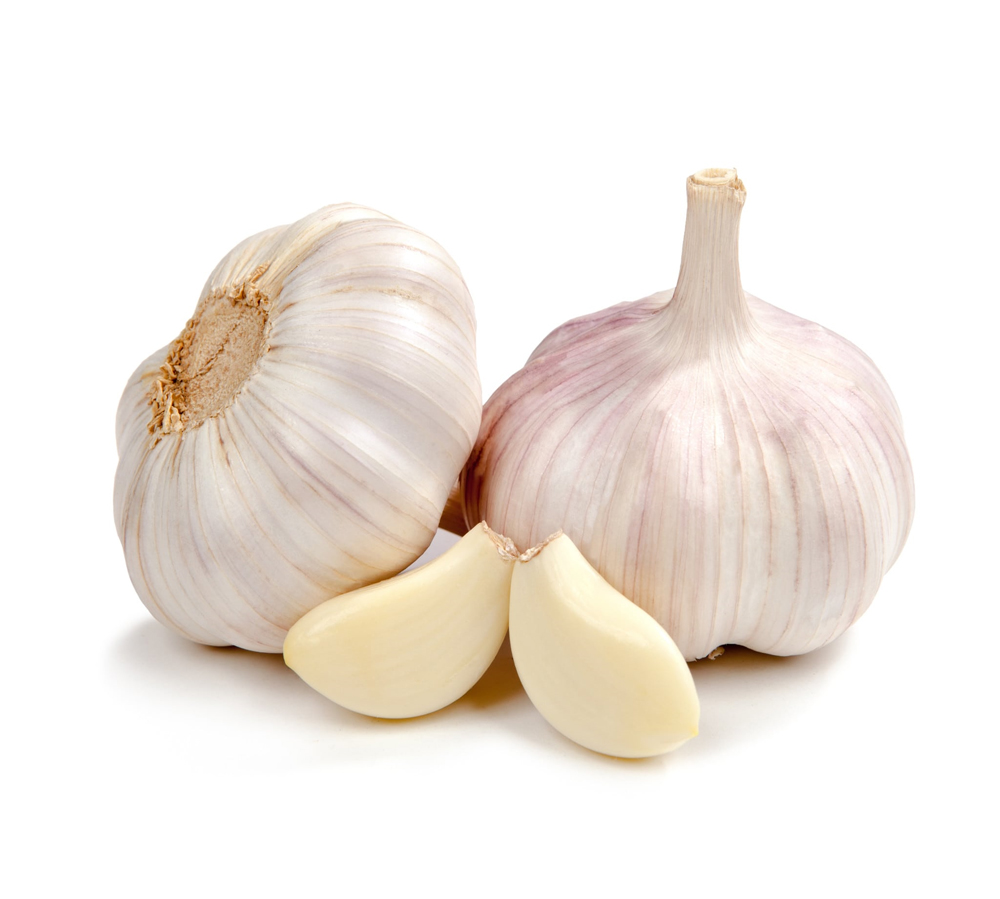
Description
Description:
L’ail est une espèce de plante à fleurs bulbeuses du genre Allium. Ses proches parents sont l’oignon, l’échalote, le poireau, la ciboulette, la ciboule et l’oignon chinois. Wikipédia
Informations nutritionnelles
| Nutritional value per 100 g (3.5 oz) | |
|---|---|
| Energy | 623 kJ (149 kcal) |
|
33.06 g
|
|
| Sugars | 1 g |
| Dietary fiber | 2.1 g |
|
0.5 g
|
|
|
6.36 g
|
|
| Vitamins | Quantity
%DV†
|
| Thiamine (B1) |
17%
0.2 mg |
| Riboflavin (B2) |
9%
0.11 mg |
| Niacin (B3) |
5%
0.7 mg |
| Pantothenic acid (B5) |
12%
0.596 mg |
| Vitamin B6 |
95%
1.2350 mg |
| Folate (B9) |
1%
3 μg |
| Choline |
5%
23.2 mg |
| Vitamin C |
38%
31.2 mg |
| Minerals | Quantity
%DV†
|
| Calcium |
18%
181 mg |
| Iron |
13%
1.7 mg |
| Magnesium |
7%
25 mg |
| Manganese |
80%
1.672 mg |
| Phosphorus |
22%
153 mg |
| Potassium |
9%
401 mg |
| Sodium |
1%
17 mg |
| Zinc |
12%
1.16 mg |
| Other constituents | Quantity |
| Water | 59 g |
| selenium | 14.2 μg |
|
|
|
|
|
| †Percentages are roughly approximated using US recommendations for adults. Source: USDA FoodData Central |
|
Avis
Il n’y a pas encore d’avis.